Gas Line Repair & Inspection in Gramercy, Manhattan
Ensure fuel gas safety with certified electronic pressure testing, appliance connections, joint repairs, and NYC Local Law 152 periodic inspections for Gramercy properties.
Call (315) 202-8009If you smell gas, leave the building immediately and call the gas utility or 911 from a safe location. Do not operate electrical switches, use open flames, or attempt to locate or repair the leak yourself.
Professional Gas Piping Diagnostics & Code Compliance
Natural gas piping in New York City is governed by rigorous municipal codes. All repair and testing must be performed with exacting engineering standards.
Executing professional gas line repair Gramercy Manhattan requires specialized certification, specialized electronic instrumentation, and deep familiarity with New York City Department of Buildings (DOB) regulations. All fuel gas piping work in New York City must be performed by or under the direct supervision of an NYC Licensed Master Plumber. Unlicensed DIY tampering with gas piping is illegal and poses severe fire and explosion risks.
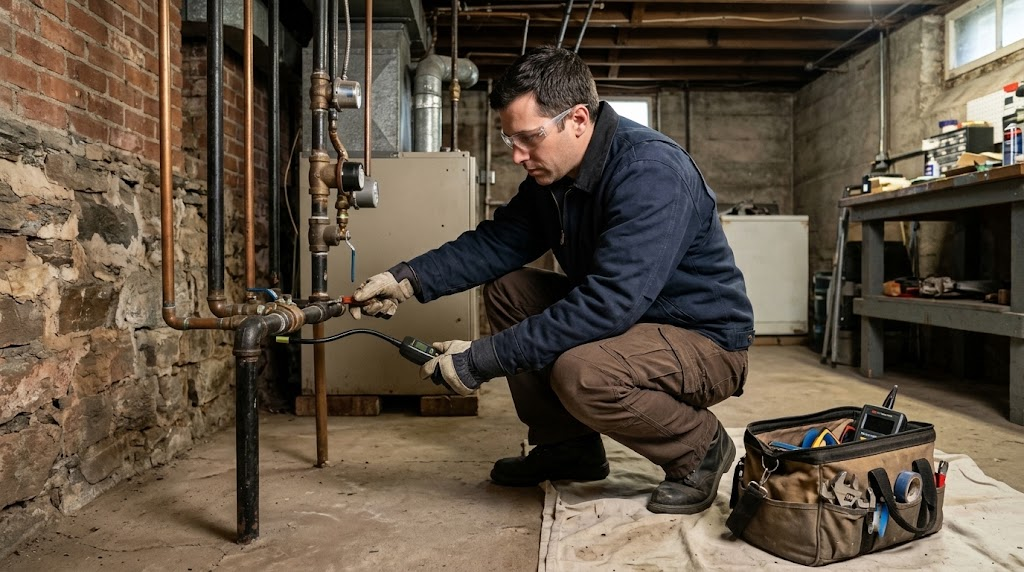
Whether your cooperative apartment building requires an official gas piping inspection Gramercy Manhattan to satisfy municipal compliance mandates or you require a certified gas line installation for stove Gramercy Manhattan following a kitchen renovation, we ensure every connection is leak-free, properly supported, and code-certified.
NYC Local Law 152: Mandatory Gas Piping Inspections
Under NYC Local Law 152 of 2016, building owners of all multi-family properties containing three or more residential units (classified as Occupancy Group R-2) are legally required to have their exposed fuel gas piping inspected periodically by an approved inspector once every four years based on Community District cycles.
During an inspection, technicians examine exposed piping from the building service entry point through boiler rooms, laundry facilities, mechanical chases, and public corridors. Any condition involving atmospheric corrosion, illegal unapproved gas flexible hoses, or leaking pipe joints must be remediated promptly with DOB paperwork filed to avoid heavy municipal fines.
Common Causes of Gas Piping Compromise
- Deteriorated Pipe Joint Compound: In historic buildings, pipe dope applied decades ago to threaded black steel joints dries out and crumbles, creating microscopic seepage paths.
- Atmospheric & Moisture Corrosion: High humidity in unventilated basements and boiler rooms accelerates surface rust on black iron piping, thinning wall thickness over time.
- Improper Appliance Connections: Uncertified gas range installations using kinked or outdated corrugated stainless steel tubing (CSST) without shutoff valves.
- Structural Movement & Vibration: Settling townhouses and continuous vibration from nearby subway lines can strain rigid pipe couplings.
Step-by-Step Gas Line Repair Protocol
Electronic Sniffing
We deploy calibrated combustible gas detectors sensitive to parts-per-million to locate micro-leaks along exposed joints.
Pressure Drop Test
The isolated gas system is pressurized with nitrogen or air to verify whether pressure remains mathematically static over time.
Certified Re-Piping
Defective sections are cut out and replaced with Schedule 40 black iron piping and malleable iron fittings using approved sealants.
DOB / Utility Sign-Off
Following test verification, necessary documentation is completed for utility gas service restoration and DOB compliance.
Frequently Asked Questions: Gas Line Repair & Inspection
Evacuate the apartment and building immediately. Do not flip light switches, operate electrical appliances, use doorbells, or light matches. From a safe outdoor location, call 911 or the gas utility emergency line immediately before contacting a plumber.
NYC Local Law 152 mandates that all multi-family residential buildings with three or more units have their exposed gas piping inspected by an NYC Licensed Master Plumber or qualified inspector once every four years to detect leaks, illegal connections, and severe atmospheric corrosion.
Due to explosive combustion risks, the NYC Fuel Gas Code strictly prohibits unlicensed individuals from cutting, threading, or altering fuel gas lines. All gas work must be performed by or under the direct supervision of an NYC Licensed Master Plumber.
After repair, the piping system undergoes a high-precision pressure test with inert gas at a specified pressure (typically 3 PSI for low-pressure domestic lines) observed over a mandated duration with zero gauge drop before certification is filed with the NYC Department of Buildings.
Serving co-ops, condominiums, and brownstones across Gramercy Park, Rose Hill, and adjacent Manhattan areas. For details, view our Service Areas page or reach out via our Contact page.